

1 January 2026
Hard water stains are one of the most common and frustrating cleaning problems in bathrooms and kitchens. These cloudy white or chalky marks appear when water rich in minerals such as calcium and magnesium dries on surfaces. Over time, the buildup becomes harder to remove and can make even a clean space look dull and neglected.
Understanding how hard water stains form and how to remove them safely is essential for maintaining shiny fixtures, clear glass, and well-preserved surfaces.
What Causes Hard Water Stains
Hard water stains develop when mineral-heavy water evaporates, leaving deposits behind. These minerals bond to surfaces and gradually build up layer by layer. Bathrooms and kitchens are especially vulnerable because of constant water exposure.
Common areas affected by hard water include:
- faucets and showerheads
- glass shower doors
- sinks and countertops
- tiles and grout
- stainless steel appliances
The longer mineral deposits remain untreated, the more difficult they become to remove.
Safe and Effective Ways to Remove Hard Water Stains
The key to removing hard water stains is using acidic solutions that dissolve mineral deposits without damaging surfaces. Gentle methods should always be tried first, especially on delicate materials.
Effective removal techniques include:
- white vinegar for glass, chrome, and ceramic surfaces
- baking soda combined with vinegar for stubborn buildup
- lemon juice for light stains and natural deodorizing
- non-abrasive commercial descalers designed for bathrooms
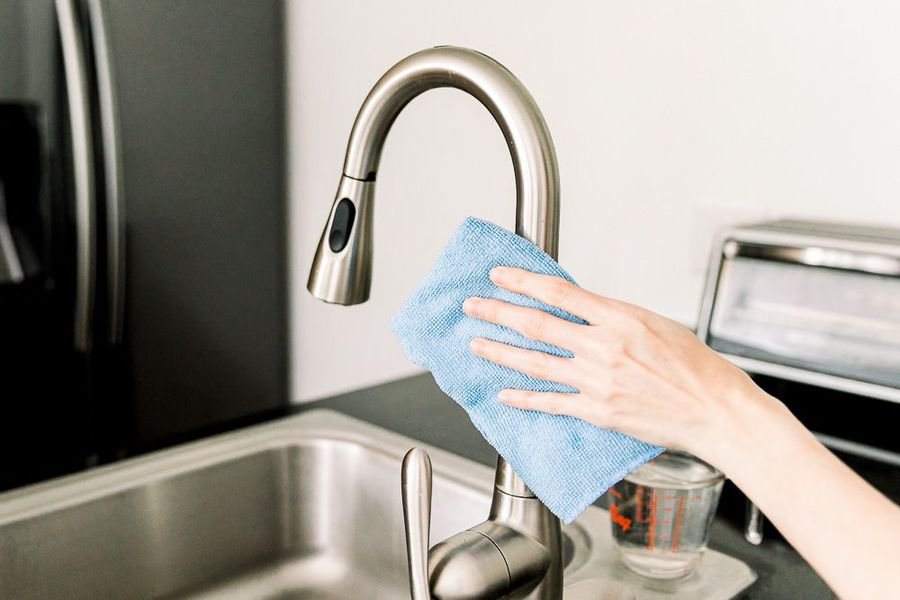
Apply the solution, allow it to sit briefly, then wipe with a soft microfiber cloth. Avoid aggressive scrubbing, which can scratch finishes and make future buildup worse.
Cleaning Different Surfaces the Right Way
Not all surfaces react the same way to acidic cleaners. Glass and ceramic tiles usually tolerate vinegar well, while natural stone such as marble or granite can be damaged by acidic products.
For stone surfaces, use pH-neutral cleaners specifically formulated for mineral removal. Always test any product on a small, hidden area before full application to prevent etching or discoloration.
Removing Hard Water from Faucets and Fixtures
Faucets and showerheads often develop visible white rings and rough textures. Wrapping the fixture with a vinegar-soaked cloth allows mineral deposits to soften gradually. After soaking, gently wipe and rinse thoroughly, then dry to prevent new spots from forming.
Regular drying of fixtures after use is one of the most effective ways to slow future buildup.
Preventing Hard Water Stains Long-Term
Removal is only part of the solution. Preventing hard water stains helps reduce cleaning time and protects surfaces.
Helpful prevention strategies include:
- wiping wet surfaces dry after use
- using a squeegee on shower glass
- cleaning fixtures regularly before buildup hardens
- installing water softeners or filtration systems
Consistent maintenance prevents minerals from bonding permanently to surfaces.
Common Mistakes to Avoid
Many people unintentionally worsen hard water stains by using abrasive sponges or harsh chemicals. These can scratch surfaces, making them more porous and prone to future staining.
Avoid steel wool, rough scrub pads, and cleaners containing bleach or ammonia on mineral deposits, as they are ineffective against calcium buildup and may cause damage.
When Professional Cleaning Is the Better Option
Severe hard water buildup that has accumulated over months or years can be difficult to remove safely at home. Professional cleaners use specialized products and techniques that remove mineral deposits without harming fixtures, tiles, or finishes.
Professional cleaning is especially helpful for glass shower enclosures, tile grout, and high-end bathroom or kitchen surfaces.
Hard water stains are a common issue, but they don’t have to be permanent. With the right cleaning methods, proper surface care, and consistent prevention, bathrooms and kitchens can stay bright and polished despite mineral-heavy water.
Addressing hard water stains early protects surfaces, improves appearance, and reduces the need for aggressive cleaning later on. A thoughtful, informed approach delivers cleaner results and longer-lasting surfaces.