

October 6, 2026
Most people judge a kitchen by what they can see: the counters, the cooktop, the front of the oven. The part of the kitchen that collects the most grease is usually above eye level and out of sight. It is the set of metal filters inside the range hood, and in many homes they have never been taken out.
That was the situation in this Redmond kitchen. The homeowners cook most days and run the hood every time. The hood itself was a large stainless unit over the range, with a row of baffle filters along its underside. Those filters had never been taken out.
What a hood filter actually does
A range hood pulls air up from the cooktop. Steam and smoke pass through, but droplets of fat carried in that air hit the angled metal blades of the filter and stick. That is the whole job of a baffle filter: to catch grease before it gets into the fan and the ductwork.
The catch is that the grease stays there. Every meal adds a thin layer. Over months it turns from a clear film into a yellow, tacky coating, and in the corners it thickens into something closer to wax. The filters in this kitchen had reached that stage. From below, the blades that should have been plain brushed steel were yellowed and speckled with brown spots along their edges.
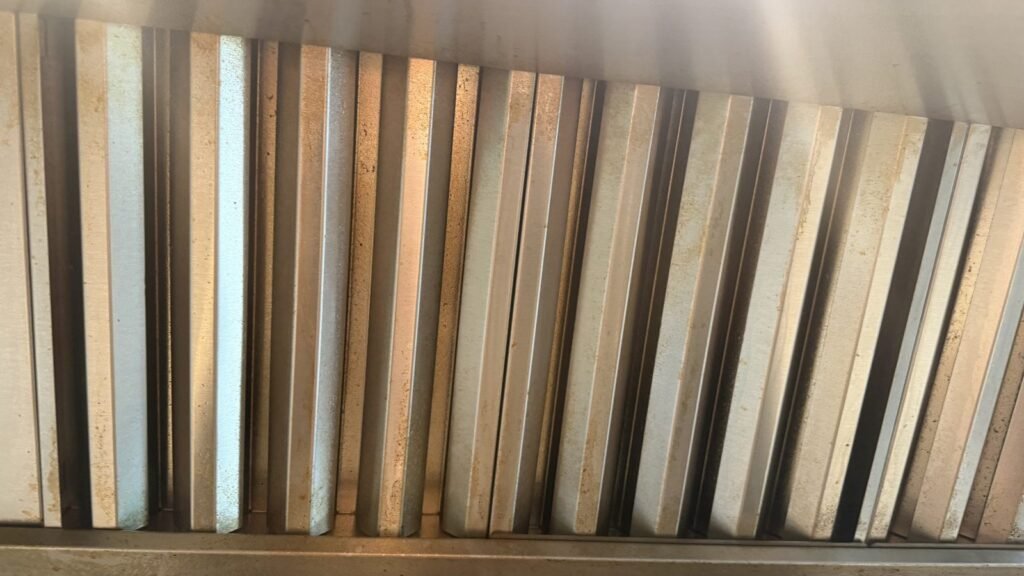
This matters for two reasons. The first is practical: a filter clogged with grease leaves less open space for air to pass through. The second is safety, and it is common knowledge in any kitchen: grease is flammable, and a thick layer of it sitting directly above burners and hot pans is a fire hazard. Clean filters are not a cosmetic detail.
Why regular cleaning never reaches them
A standard cleaning wipes the outside of the hood. It does not take the hood apart, and it should not, because getting the filters out, degreasing them and putting them back takes real time. That is why the filters stay dirty even in kitchens that are cleaned often. They are not missed by accident; they simply sit outside the scope of a regular visit.
A deep clean of the kitchen is the moment to reach them. On a first visit the cleaner walks the kitchen before starting, notes the zones that will take the most time, and confirms the time estimate with the client. Here, the walkthrough put two items at the top of the list: the hood filters and the oven.
Cleaning the filters
Baffle filters are designed to come out. Each one slides or tips free from its track. Once out, they were washed under hot water with a degreaser, blade by blade. Hot water matters here: old grease softens with heat, and a degreaser left on for a few minutes breaks down the layer that a sponge alone would only smear. Once the degreaser had worked, a stream of hot water carried the loosened coating off the blades.
The filters were then rinsed, dried completely and set back in their tracks. The inside of the hood around the filter openings was wiped down too, since grease that has dripped from the filters collects along the channel at the front edge.
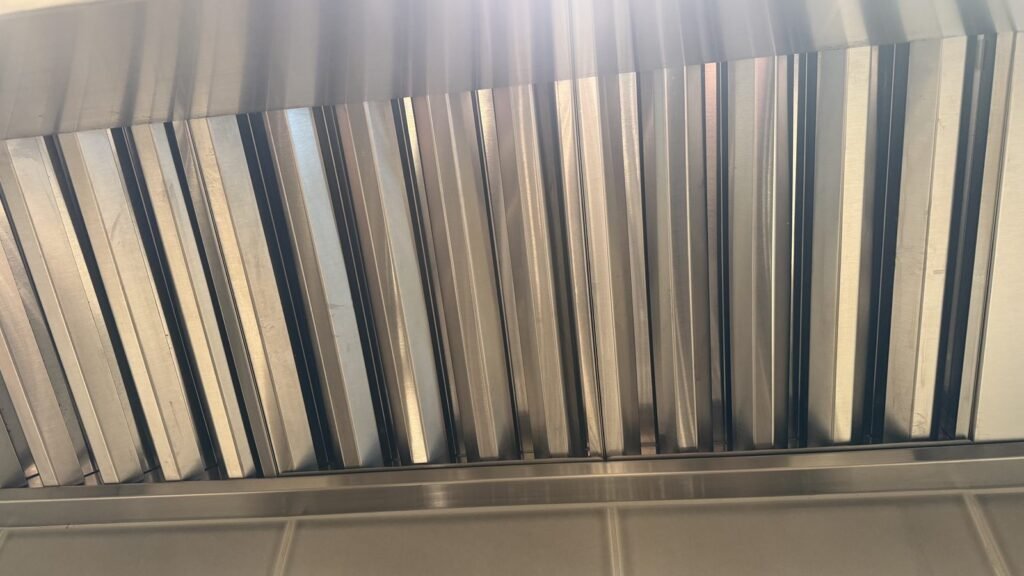
The difference is visible without touching anything: the blades are silver again and reflect the light. With the open gaps between the blades cleared, the hood can pull air through the filters again the way it was built to.
The second hidden layer: the oven
The same kitchen had the same problem one level down. With the oven door open, the inside of the door glass was covered in a brown, speckled film, dense enough that the glass had turned amber. The oven floor had dark patches of carbon where spills had been baked on over many cycles. The frame around the opening and the door gasket carried brown streaks, and the rack side rails were stained.
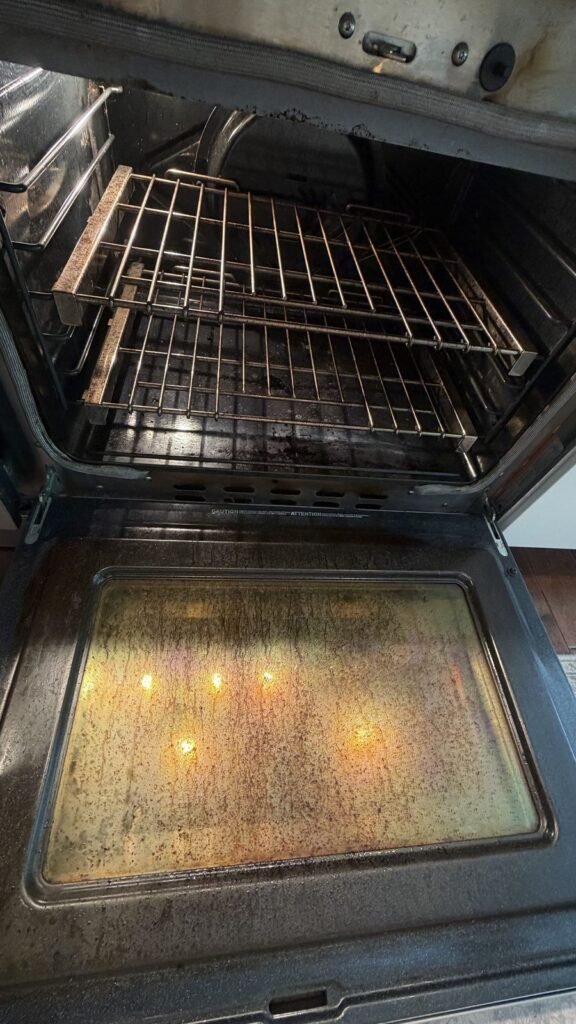
Carbon in an oven is grease that has been heated past the point where a degreaser alone can dissolve it. It needs a product made for carbon and, just as importantly, time. The cleaner applied a carbon remover to the floor and the inside of the door glass and let it sit before touching it. That dwell time is what does the work. Scrubbing too early means scraping at a hard layer and risking scratches on the enamel and the glass.
After the dwell, the softened carbon was lifted from the floor, the glass was cleaned until it was clear, and the racks were cleaned and set back in. The gasket was wiped gently, since it is soft and easy to damage.
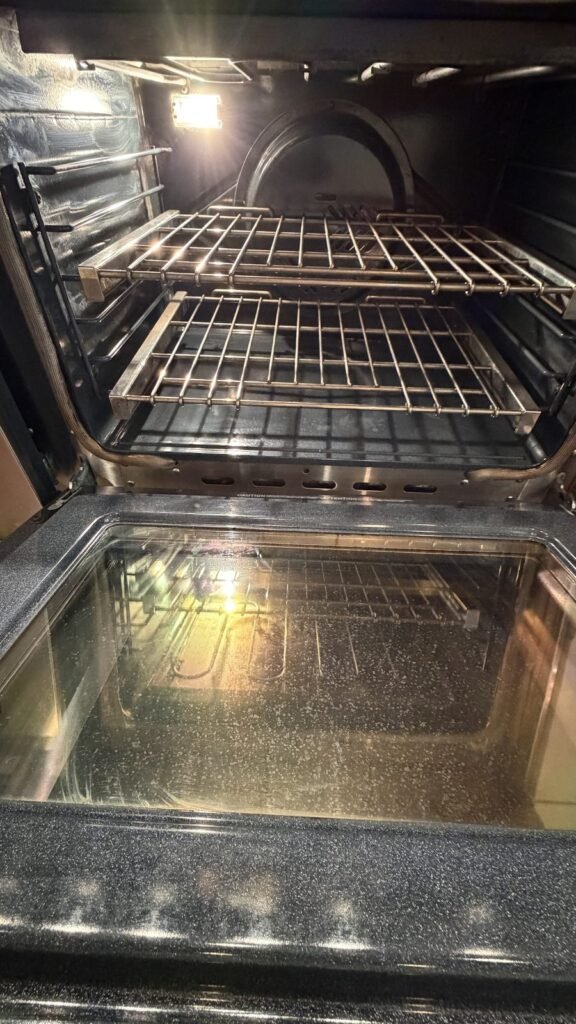
The inner glass is now transparent enough to show the racks and the heating element reflected in it, and the floor is an even dark enamel again.
What to take from this kitchen
The thesis of this case is simple: the dirtiest parts of a kitchen are the ones that have to be taken out or opened to be cleaned. The hood filters and the oven interior both fall outside a regular visit, and both collect grease every single day whether anyone looks at them or not.
If you cook often and your hood has filters you have never removed, they are worth checking. Look up at the underside of the hood with the light on. Plain brushed metal is a good sign. Yellow, sticky or dark blades mean the filters are holding a layer of grease, and a deep clean is the right time to deal with it.
JenyClean is licensed, bonded and insured, with general liability coverage and workers’ comp for every cleaner, which matters when a cleaner is taking parts out of a client’s appliances.
If your kitchen needs a deep clean that goes past the surfaces, we can include the hood filters and the oven. Book online to schedule kitchen deep cleaning in Redmond.